The Art of Load Balancing
Optimizing Web Performance: The Art of Load Balancing
In the fast-paced digital landscape, where millions of users access applications simultaneously, ensuring a seamless and efficient user experience is paramount. This is where the role of load balancers becomes crucial – they act as the traffic cops of the internet, strategically distributing incoming requests among a pool of servers. In this comprehensive guide, we'll delve into the technical intricacies of load balancing, its types, technologies, and the importance it holds in enhancing application performance.
Understanding Load Balancing
Imagine load balancing as having a magical sorting hat at Hogwarts, but instead of sorting students into different houses, it helps sort candies for a big wizard candy party! So, let's say you have a bunch of friends who love different candies – some like chocolate frogs, others prefer Bertie Bott's Every Flavor Beans. The magical hat (load balancer) makes sure that each friend gets the right candies by spreading them out equally. If one friend loves chocolate frogs a lot, the hat might give them a bit more, just like how a load balancer considers the capacity of servers. This way, everyone gets their favorite candies, and the wizard candy party is a magical success!
What is Load Balancing?
Load balancing is the method of distributing network traffic equally across a pool of resources that support an application. Imagine it as a traffic cop directing cars to different lanes to avoid chaos and ensure a smooth flow. In the digital realm, load balancers play the role of invisible facilitators, ensuring that all resource servers are used efficiently.
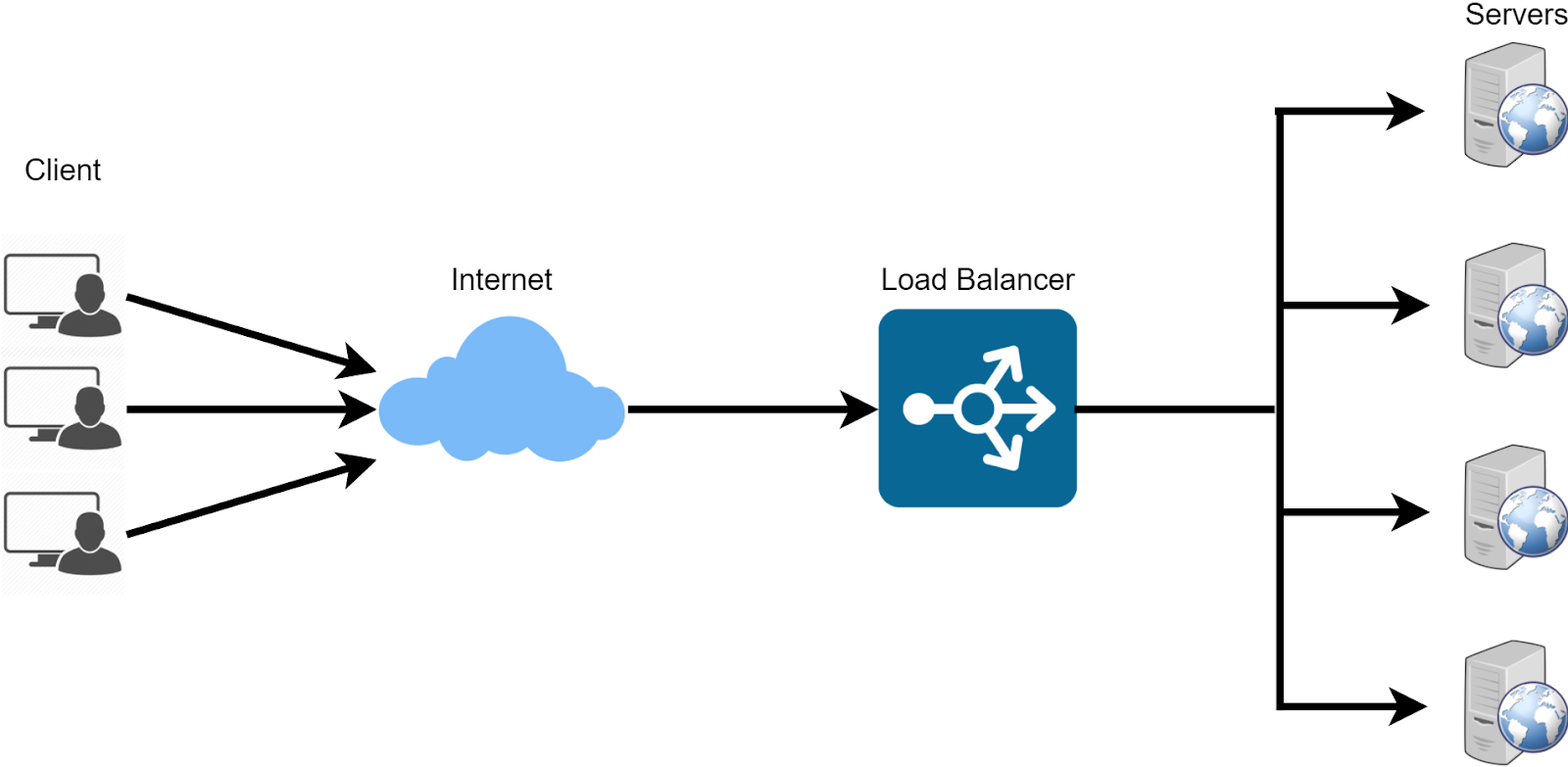 Source:Cloud4u
Importance of Load Balancing
1. Enhanced Performance
Think of load balancers as efficient pizza servers at a crowded party. By distributing traffic evenly, they prevent any single server from being overloaded, leading to faster response times for users.
2. Scalability
As more people join the party, additional pizza servers may be needed. Load balancers make it easy to add or remove servers without disrupting operations, ensuring a seamless experience for users.
3. Fault Tolerance
Servers can misbehave or go offline, similar to a pizza server having a bad day. Load balancers detect such issues and reroute traffic to healthy servers, ensuring uninterrupted service.
4. Optimized Resource Usage
Just as a good pizza party planner ensures all pizzas are used wisely, load balancers optimize computing resource usage by distributing the load efficiently, preventing servers from being underutilized or overwhelmed.
Types of Load Balancing
1. Application Load Balancing
Modern applications have multiple server farms dedicated to different functions. Application load balancers redirect traffic based on requested content, such as HTTP headers or SSL session IDs. For instance, an e-commerce application may direct browsing requests to servers with images and videos, while shopping cart requests go to servers capable of maintaining many client connections.
2. Network Load Balancing
Network load balancers examine IP addresses to redirect traffic optimally. They track the source of application traffic, assigning static IP addresses to multiple servers. This ensures balanced server load.
3. Global Server Load Balancing
In global server load balancing, servers are distributed across geographically dispersed locations. Local load balancers manage load within a region, redirecting traffic to the nearest server. In case of server failure, traffic may be redirected globally.
4. DNS Load Balancing
DNS load balancing configures a domain to route network requests across a pool of resources. It helps maintain application availability and balance traffic globally.
Load-Balancing Technology
Load balancers come in two types: hardware and software.
1. Hardware Load Balancers
Hardware-based load balancers are appliances securely processing and redirecting traffic to multiple servers. They require an initial investment but offer centralized management.
2. Software Load Balancers
Software-based load balancers are applications performing load-balancing functions. They are more flexible, scalable, and cost-effective, especially in modern cloud computing environments.
Technical Overview of Load Balancing Algorithms
1. Round Robin
Round Robin distributes incoming requests in a cyclical order among available servers. It's like taking turns – each server gets an equal opportunity.
2. Weighted Distribution
Weighted Distribution considers server capacity, with higher-weighted servers receiving more requests. It's like giving more pizza slices to servers with more capacity.
3. Least Connections
Least Connections directs requests to the server with the fewest active connections, ensuring even workload distribution.
4. Random Selection
Random Selection distributes requests randomly among available servers, introducing an element of unpredictability.
5. IP Hash
IP Hash uses the source IP address of the client to consistently map requests to specific servers, ensuring session persistence.
Load Balancing Strategies
1. Client-Side Load Balancing
Client-side load balancing occurs at the client's end, where software makes decisions on which server to connect to. It empowers clients to make informed decisions based on server load and capabilities.
2. DNS Load Balancing
DNS load balancing uses the Domain Name System to distribute incoming requests across multiple servers, improving fault tolerance and load distribution.
3. Server-Side Load Balancing
Server-side load balancing occurs at the server's end, with a dedicated component making decisions on distributing incoming requests. It provides centralized control over load distribution.
4. Global Load Balancing
Global load balancing extends load balancing beyond a single location, considering the distribution of requests across multiple data centers or geographical regions.
5. Application-Layer Load Balancing
Operating at the highest layer of the network stack, application-layer load balancing considers the content and characteristics of application data for intelligent load distribution.
6. Network-Layer Load Balancing
Network-layer load balancing operates at a lower level, focusing on routing decisions based on network-level information, such as IP addresses.
7. Layer 7 Load Balancing
Layer 7 load balancing operates at the application layer, making decisions based on the content of the application data. It allows for intelligent distribution based on the actual content, ensuring optimized performance.
Importance of Layer 7 Load Balancing
1. Intelligent Distribution of Requests
Layer 7 load balancing enables intelligent distribution based on the content of the application data, optimizing overall system performance.
2. Application Awareness
Operating at the application layer, layer 7 load balancing is aware of specific features and requirements, contributing to a more customized and efficient distribution of tasks.
3. Enhanced User Experience
Layer 7 load balancing can consider user-specific information, leading to a more personalized experience and improved overall user satisfaction.
4. Content-Based Routing
Layer 7 load balancing supports content-based routing, making decisions based on the content of the request and ensuring tasks are assigned to servers suited to their strengths.
In conclusion, load balancing is a critical aspect of optimizing web performance, ensuring efficient resource utilization, fault tolerance, and enhanced user experience. By understanding the types, technologies, and strategies involved, organizations can strategically implement load balancing to meet the demands of today's dynamic digital landscape. Just as a well-organized pizza party ensures every guest gets the best experience, effective load balancing ensures every user gets a seamless and responsive application experience.